
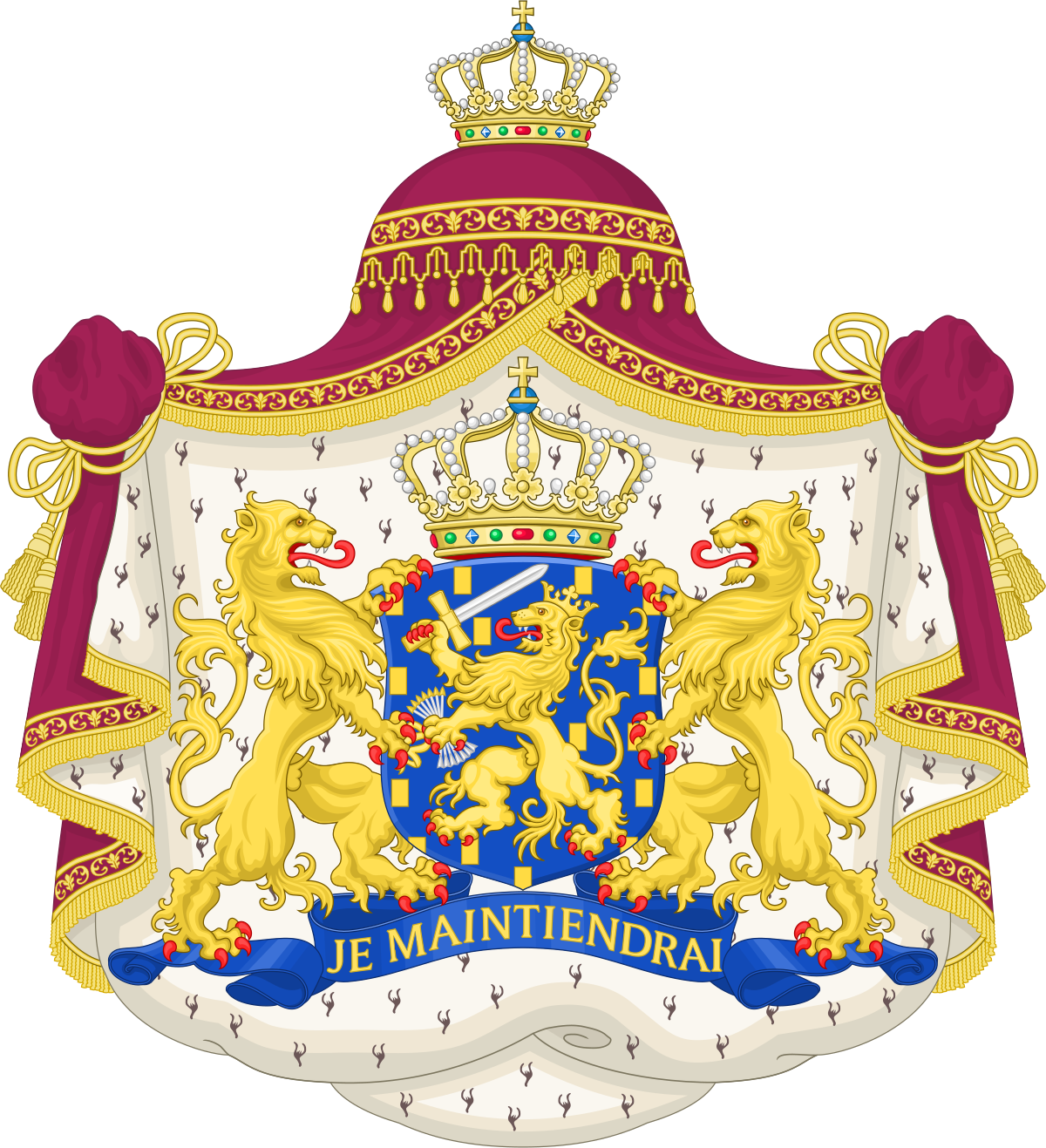
The Royal House Of The Netherlands
Who is next in line to the throne of The Royal House Of The Netherlands
(-Written by Mumtaz Afrin): - The Netherlands was a republic made up of a federation of seven independent provinces until 1795. The Dutch Republic was changed into the contemporary unitary state of the Batavian Republic under the French occupation (1795-1806). When Napoleon appointed his brother Louis as King of Holland, it later became a Kingdom (1806-1810). The first Constitution for the Kingdom of the Netherlands was adopted in 1814, two years after the Netherlands reclaimed its independence.
Succession To The Throne
When a Dutch monarch dies or abdicates, he or she is succeeded by his/her eldest child.
The oldest of these children inherits their grandparents if the monarch's eldest child passes away before them but had legitimate children. The succession transfers to other members of the Royal House in a specific order, as specified in article 25 of the Constitution, if the king, however, has no legitimate descendants.
On April 30, 1980, Princess Beatrix succeeded her mother, Queen Juliana. She was replaced exactly 33 years later, on April 30, 2013, by her son, Prince Willem-Alexander. Princess Catharina-Amalia, the Princess of Orange, took over as the first in line to the throne at that time.
Line Of Succession
Article 25 of the Constitution establishes the procedures for throne succession. The monarch is to be replaced by his or her eldest child, regardless of whether that kid is a son or a daughter, according to the most recent version of the Constitution. If the eldest kid has passed away but left behind legal offspring, the oldest child will succeed. The crown instead descends to the ancestors of the monarch's father or grandparent if they are not farther distant from the deceased King than the third degree of consanguinity and the monarch has no children or grandchildren. Therefore, the two oldest sons of his aunt Princess Margriet lost their right to succeed when Prince Willem-Alexander was crowned King.
A successor may be chosen by the Act of Parliament, which must be approved by both Houses of Parliament convening in joint session if no heir can be identified within the House of Orange-Nassau.
Being the eldest child of King Willem-Alexander, Princess Catharina-Amalia, the Princess of Orange, is now first in line for the throne. If she becomes queen while still a minor, a regent will be chosen to act as her representative when using the royal prerogative. The Princess of Orange is followed in command by her younger sisters Princess Alexia and Princess Ariane. If for some reason they were unable to succeed, Prince Constantijn would be the next in line, followed by his children, Countess Eloise, Count Claus-Casimir, and Countess Leonore. Princess Margriet is the last in the line of succession.
Degrees Of Consanguinity
According to the Membership of the Royal House Act, the royal family members who are related to the monarch in the first or second degree of consanguinity, as well as their spouses, make up the Royal House. Only people related to the king in the first, second, and third degrees of consanguinity are eligible to succeed to the throne, according to the Constitution.
Although the wives of the monarch's relatives in the first and second degrees of consanguinity are members of the Royal House, spouses of the monarch's relatives are not eligible for succession to the throne.
The distance from a common ancestor or descendant, either in the direct or collateral line, is used to calculate the degree of consanguinity. The great-grandparent, the grandparent, the parent, and the child make up the straight line of descent. Grandchild to grandparent distance in a direct line is two degrees, compared to the child to parent distance of one degree. In other words, the Princess of Orange is the King's first cousin.
There are more steps in a relationship in the collateral line than in a straight line. The collateral line's degrees represent the separation between a brother or sister, an aunt or uncle, or a cousin. When calculating degrees in the collateral line, one counts backward from the common ancestor to the collateral line's relatives (two steps mean a relative in the second degree, and three steps mean a relative in the third degree).
Prince Constantijn, for instance, has third-degree ties to the Princess of Orange and second-degree ties to the King. Although there is no parent-child tie, Princess Beatrix is the common parent or ancestor of the people in question. Note that only relationships between parents and children can result in the first-degree kinship between brothers and sisters.
Losing the right to the throne
Since only people who are relatives of the King in the first, second, and third degrees of consanguinity are eligible to succeed to the throne, Princess Margriet's children lost their right of succession when Prince Willem-Alexander became King. On the other hand, a first- or second-degree relationship with the King is necessary for membership in the Royal House.
If they wed without Parliament's approval, members of the Royal House who are next in line to the throne also forfeit their right to succeed. When Prince Friso wed Mabel Wisse Smit in 2004, for instance, this was the situation. The same was true with Princess Christina (1975), Prince Pieter-Christiaan (2005), Prince Floris (2005), and Princess Irene (2005). (1964).
Abdication
The Dutch Constitution allows for abdication even though monarchy is a lifelong institution. King Willem I, Queen Wilhelmina, Queen Juliana, and Queen Beatrix have all abdicated the throne thus far, continuing a tradition. The king chooses the exact moment of abdication, and the next in line to the throne takes over.